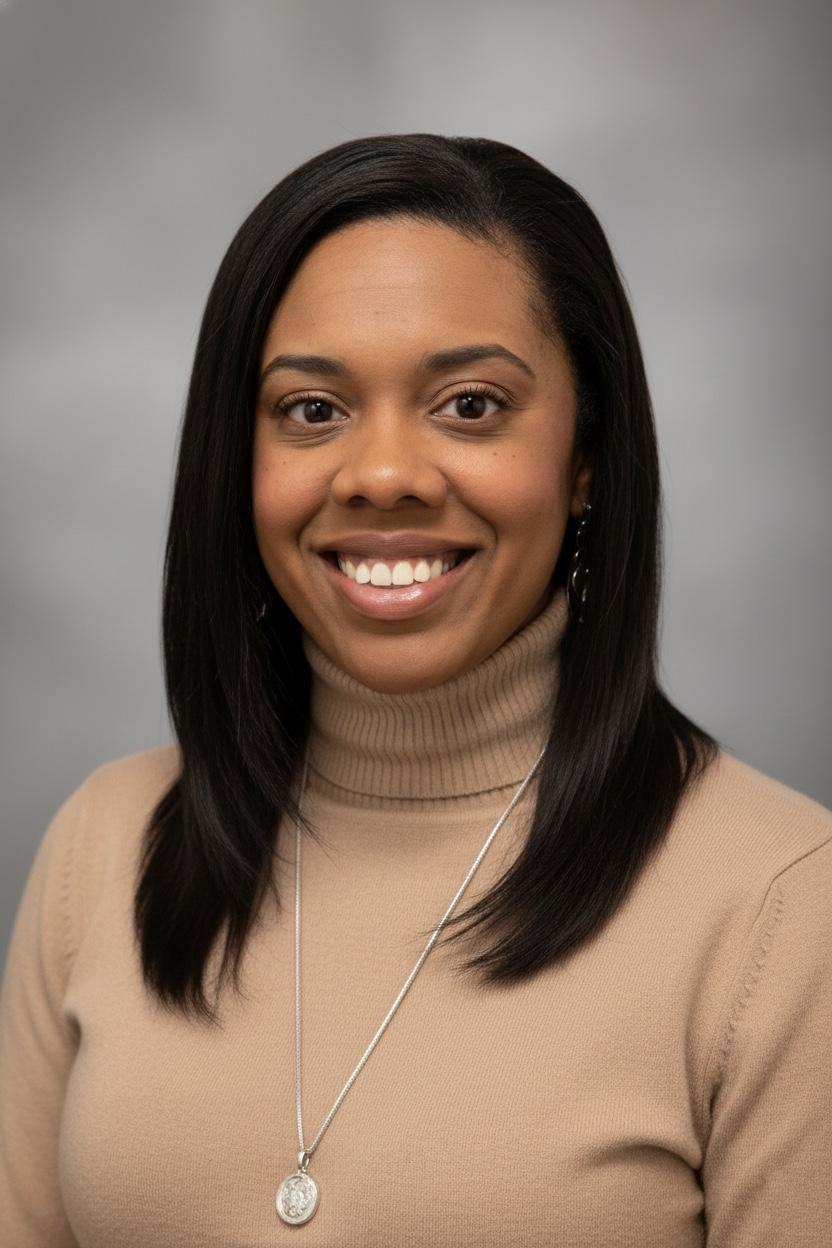
During Black History Month, AFSA is posting profiles of some of our outstanding Black school leaders.
When she talks about her job as director of culturally and linguistically responsive initiatives for the Buffalo Public Schools, Dalphne Bell of the Buffalo Council of Supervisors and Administrators, AFSA Local 10, reflects on “being a Black woman who didn’t grow up experiencing celebratory Black culture or any other cultural celebrations.” She adds, “It was Thanksgiving, and I only learned that the Pilgrims and everyone were having a nice meal.”
Born, raised and educated in Buffalo, Dalphne was greatly influenced by her parents — her mother a pediatric nurse and her father a psychiatric nurse. She felt destined to become a medical professional as well.
She loved science and research, but early in her medical studies, she discovered she became ill at the sight of blood. She switched to education and, by age 19, was a teacher’s assistant in Buffalo Public Schools.
She says her mother, who later became a math teacher and then an administrator, encouraged her to set the highest standards for herself. She also credits her education. She received a scholarship to the Park School of Buffalo and says it made a huge difference.
“There was an inquiry-based style of learning. They taught us how to solve problems. When I was 10, this really affected how I learned,” she says.
At Buffalo State University, then known as Buffalo State College, she met Dallas Bell and married him three years later at age 21. “I must have done something right because we have a successful marriage and he is my best friend,” she says. Their children — Alanna, 16; Austin, 14; Ava, 11; and Alivia, 5 — “are my motivation.”
Right out of college, Dalphne became an elementary classroom teacher in Buffalo Public Schools. She later served as a data coach, analyzing student data to determine where additional instruction was needed.
Before age 30, she became a district administrator, serving as supervisor of mathematics. A turning point came when she became involved in the Culturally and Linguistically Responsive Initiative, which later became an independent department.
“The most powerful piece is that it is so personal and individual, it makes you feel like a valuable member of the learning community,” she says.
The district is highly diverse, with about 80% of students identifying as students of color. More than 90 languages are spoken. The district includes an international elementary school and an international high school.
The Culturally and Linguistically Responsive Initiatives program has been recognized statewide for its success. Dalphne has been named one of Buffalo’s 30 Under 30 and 40 Under 40 honorees.
“I love my job,” she says. “I’m aware that Buffalo is one of the most racist cities in the U.S., and yet I can positively affect the lives of 30,000 students. You never know where seeds are going to blossom.”
In 2022, tragedy struck when a white supremacist drove to Buffalo and carried out a mass shooting at a Tops supermarket, killing 10 people and wounding three others. After his arrest, he pleaded guilty to state charges in Erie County Court.
“We immediately went into crisis mode and worked constantly,” Dalphne says. “Everyone had a connection to someone who was affected by the massacre. One of the victims was a substitute teacher. This will always be part of our lives.”
She says the work done through the initiative helped create bonds and reinforced the idea that teachers, regardless of race, are allies. Still, she believes many teachers and students were heartbroken, angry and frightened — and may never be the same.
In 2023, she says, the district won a prestigious Magna Award from the National School Boards Association for its innovative “Our Story Project.” The program, which earned the Grand Prize in the large-district category, was recognized for boosting student engagement, literacy and cultural understanding by encouraging students to share personal narratives.
“If you’re working with students like ours,” she says, “you can’t ignore their hair, their culture, their diversity. For too long, only Christian holidays were recognized. We use our diversity calendar to be intentional about incorporating as many holidays and cultural celebrations as possible.”
Even when she is not working, Dalphne stays busy. She coaches cheerleading for her three daughters in their public schools and community programs — a time-consuming commitment.
She is also an active member of Sigma Gamma Rho, one of the Divine Nine sororities. Whenever possible, she reads or listens to audiobooks during her long daily drives.
“I’ve been taken by ‘Let Them’ by Mel Robbins about accepting what you can’t change in other people,” she says.
She believes that is sound advice — though she makes an exception when it comes to her four children. She limits their cellphone use to two hours a day. She says children face constant stimuli, which she believes has rewired their brains and contributed to mental health challenges — challenges she believes can be overcome.