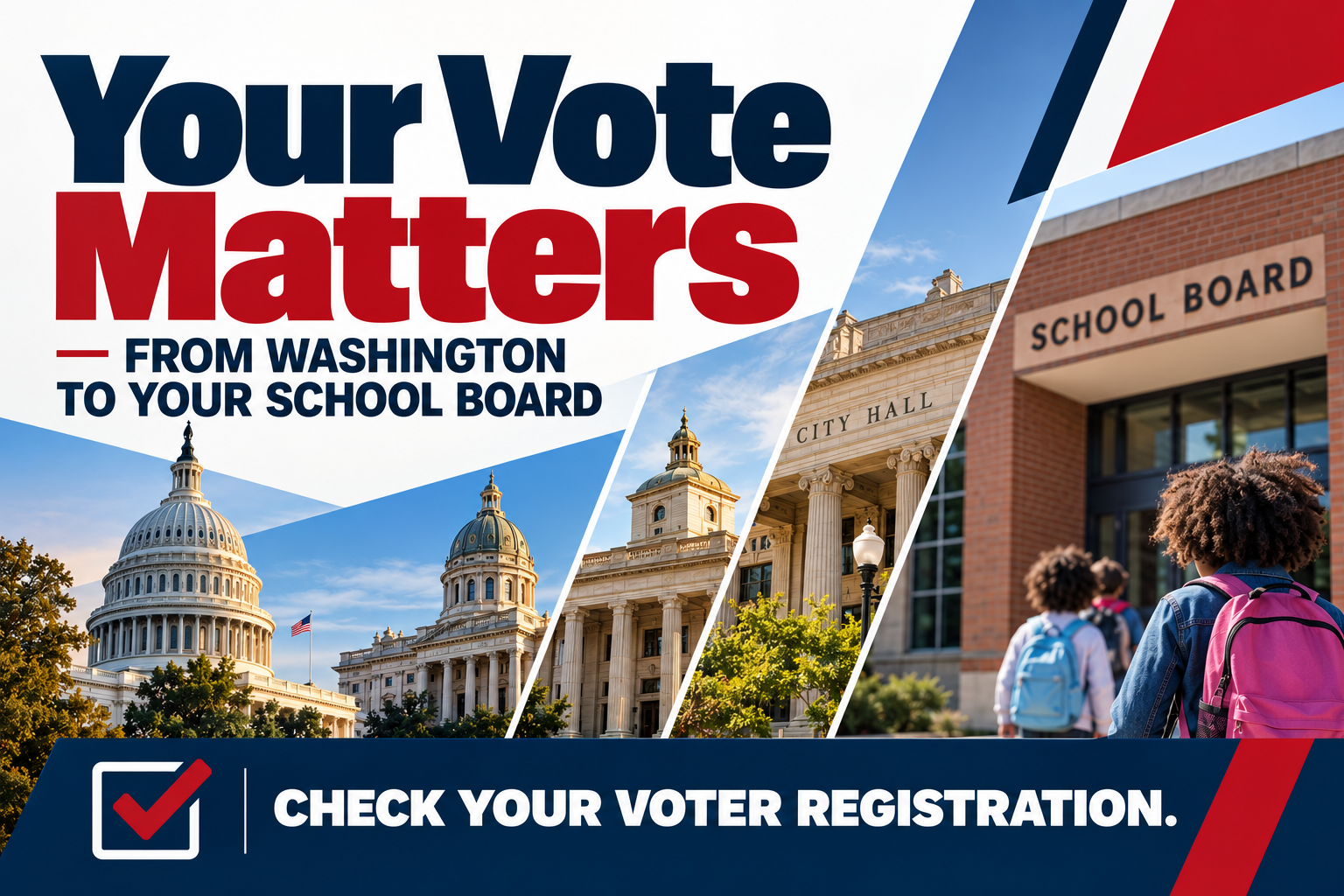
Check your voter registration with Better in a Union
When we talk about the upcoming elections, it is easy to focus on Washington, D.C. We hear about Congress, the president and the big national issues. Those elections matter, but they are only part of the story. What happens in Washington can eventually affect what happens in our states, our communities and our schools. And what happens much closer to home can sometimes affect us even more directly.
That’s why, as we head into another important election, we need to pay attention to the entire ballot—not just the races that get the most attention.
For those of us who work in public education, we already know that decisions made far away can end up affecting our work every day. Federal decisions can affect education funding, labor policies, student programs, civil rights protections and other issues that eventually reach our states and school districts.
Then there is the state level. State legislatures and state education departments can have a tremendous impact on public education. They can make decisions about funding, curriculum, testing, educator certification, accountability, student services and policies that affect the people working in our schools.
But we can't stop there. County government matters. City and town councils matter. Local elected officials matter. And, of course, school boards matter.
Sometimes the candidates who will have the most direct impact on our communities are the people we hear the least about. Your city or town council may be making decisions about education budgets, property taxes, housing, transportation, public services and development. Your county government may be responsible for a wide range of services that affect your family and your community.
Your school board is making decisions that can affect the schools where you work and the students you serve. School board members can have a say in district budgets, programs, policies, facilities, student services and priorities that affect educators and families.
These races may not have television commercials every five minutes, and they may not show up in the national news. That doesn't mean they aren't important.
Most of us care about more than one thing when we vote. We care about our families, the economy, health care, housing, public safety, transportation, taxes and the future of our communities. And yes, we care about our schools and public education.
If you work in public education, it is fair to ask candidates where they stand on the issues that affect your profession and the people you work with every day. Who understands the challenges facing educators? Who is talking about the students in our classrooms? Who understands the importance of strong public schools? What do candidates say about the people who actually do the work?
Those are questions worth asking, and the answers should be part of your decision.
Do your homework
Nobody else can tell you what should matter most when you vote. Take some time to learn about the candidates. Read their websites and campaign materials. Look at their positions on issues that matter to you. If they have served in elected office before, look at their record. Attend a candidate forum if there is one in your community and talk with people you trust.
And don't rely only on a social media post or something someone sends you. Take a few minutes and check it out for yourself.
You may not agree with a candidate on every issue. That's normal. The point is to understand the choices in front of you and decide which candidates best reflect your own priorities and values.
First, make sure you're registered
Before you start researching candidates, make sure you can vote.
Check your voter registration with Better in a Union
If you've moved, changed your name or haven't voted in a while, don't assume everything is still correct. Take a minute to check your registration and make sure your information is current.
You can also find your state's official election information through federal voter resources. Registration deadlines and voting rules are different from state to state, so check the requirements where you live.
Know your options for voting
Don't wait until Election Day to figure out how you're going to vote. Depending on where you live, you may be able to vote early, vote by mail or vote in person on Election Day.
The rules are different across the country, so check the information for your state and know the deadlines. If you are voting by mail, give yourself enough time to receive your ballot, complete it and return it. If you plan to vote early, find out when early voting begins and where you can go.
A little planning can make the process easier.
Look at the whole ballot
When you get your ballot, don't just vote for the names you recognize. Look at every race.
You may see congressional races, state legislative races, county offices, city or town council races, school board races, judges, special districts and local ballot measures. Not every voter will have the same races on the ballot, which is why it is worth finding your actual ballot and taking the time to understand what—and who—you are voting on.
The local races can be easy to overlook, particularly when there is little coverage of the candidates. But those elected officials can make decisions that affect your community long after the election is over.
Then tell someone else
Once you've checked your registration and made your voting plan, talk to the people around you. Tell your friends, your coworkers and your family. You don't have to tell anyone who to vote for. You can simply remind them to check their registration, learn about the candidates and make a plan to vote.
A lot of people pay attention to the presidential and congressional races but don't realize how much their local elections can affect their daily lives. A conversation with a friend or coworker can be a good reminder that there is more to the ballot than the names we see most often.
The upcoming election is about more than what happens in Washington. It is also about what happens in our states, counties, cities, towns and school districts. For those of us who work in public education, those decisions can eventually show up in our schools, our classrooms and our working lives.
So take a few minutes. Check your registration. Find out what's on your ballot. Learn about the candidates and the issues. Decide what matters to you.
And then vote.
Check your voter registration with Better in a Union